


 Hello, readers. Feel free to post questions about English here and to answer them. Let’s see if we cannot get a dialogue going.
I know that English can be a “CRAZY” language, but it’s a powerful one as well. Let’s help each other. Just for fun and to help each other.
Thanks!
Hello, readers. This educator, me, misses teaching. I am wondering if any readers here would like some little English tips I’ve picked up through my many years of teaching English, ELL, and reading? If so, reply here or send me a message!
I believe it’s important to give back, and this is one way I can do that. I’ve volunteered in literacy settings by tutoring or other ways since the 1980s, and I miss it.
So this is a personal post: I am wondering if any readers here would like some little English tips I’ve picked up through my many years of teaching English, ELL, and reading? If so, reply here or send me a message!
Thanks for reading in this CRAZY ENGLISH language!
Laura Lee
As my friend and writer noted, homelessness is a serious and pervasive problem. Please read her post here: Laura Jean Bailey post on homelessness.
Especially notice the rent prices and the facts about domestic abuse and homelessness. I cannot imagine anything worse than being homeless.
We can do better.
Okay, writers, artists, educators, poets, HUMANS… Hear this:

Tiferet Journal hopes to foster peace through literature and art.
There is nothing better. Period. Read. Write. Learn.
 The informative and often fun site, ThoughCo.com published an article about the Oxford of serial comma here: ThoughtCo.com Article on the Oxford Comma .
This comma is known as the Oxford Comma, the Harvard Comma, and more commonly, the serial comma.
But what is this hot topic punctuation mark? As the author Richard Nordquist writes,
The Oxford comma is the comma that precedes the conjunction before the final item in a list of three or more items:
I just love those examples!
ThoughtCo.com believes the serial comma should be used unless the style manual a writer is using advises against it.
I have to love a “fiercely debated” punctuation mark! What do you think? Where do you stand on this hot topic?
Laura Lee
 As I wrote earlier and as this article declares, “In half a decade, the number of U.S. adults who are reading poetry has nearly doubled.” Read all about it on the NPR (National Public Radio) site, where they quote from the NEA (National Endowment for the Arts) study here: Poetry is making a comeback
If a comeback, not even 12% of Americans reading poetry is a paltry figure to me. How can poetry not be a part of so many lives? And do we even have 12% of Americans buying/ supporting poets and poetry?
I’m not sure about that. I’d love to see America support its poets and truly embrace poetry, but we have a long way to go.
Who walks in the fen when it’s raining? The Big Guy and I do. Peaceful. Beautiful. Today is cloudy, so the leaves are not in a riot of sunshine, but they are lovely. The raindrops glowed on the leaves, hard to see from cell phone photos.
Nonetheless, the fen is an interesting and often lovely walk.
What is a fen? Definition of fen
While a wetland, a fen is not a bog, swamp, or marsh. So what is a fen?
It is an unusual wetland; The US Dept. of agriculture defines a fen as:
Fens are a type of wetland. Wetlands are ecosystems where the water table is at or near the ground surface for most of the growing season on most years, and as a consequence, the substrate is poorly aerated, and inundation or saturation last long enough that the dominant plants are those that can exist in wet and reducing conditions. The long duration anaerobic conditions limit the decomposition of plant roots, leaves, and stems and over time this organic matter accumulates to form peat soil. Wetlands include the margins of streams and rivers, and the shores of lakes. There are several types of wetlands: swamps, marshes, bogs, and fens.
Furthermore, there are a number of types of fens, and described here: Types of Fens. Furthermore, there are both rich fens and poor fens. Scientists are beginning to determine the age of fens, and since peat accumulates slowly, fens are being determined to be thousands of years old, as discussed here: Age of fens
In our many years of walking here, we know the fen as the place of interesting plants.


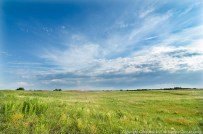 I accidentally grew up with a few acres of rare Midwestern prairie behind our home. When we moved from Chicago, my parents bought a house not yet built, in a neighborhood with streets not yet paved. At first, we had sticks in mud with street names painted on them. The area was filled with former soldiers using their benefits to buy their first home in that unknown place called the suburbs. The lure was land, open spaces, less crime, better schools, and a chance at the so-called American Dream.
Before we moved, neighbors had nearly burned us out of our apartment with cooking while drunk, had left their used needles in the common ways, and gangs were eyeing my now teen aged elder brother.
My parents were terrified of what would happen to my teen brother at first, then the rest of us.
So they headed west, to a suburb mostly mud and dreams at that time.
And a surprise behind the house? The few acres of prairie remained, with a small swamp at one end. We didn’t know it at the time, but two towns were suing for the right to build on this land. Each town felt these precious acres were part of their town, and the lawsuit went on for a dozen years.
But during those years, we had this piece of prairie heaven to ourselves; it was a place for children to safely play and explore. We grew to believe that butterflies lived everywhere and were plentiful, that wildflowers would forever grow, that the summer days would never end as we played, made up stories (okay, that was me), and explored.
But to me, I was a bit afraid of the swamp up close, for the stories were becoming our childhood myths: witches lived there. Children–and even airplanes!–disappeared in the swamp.
So I spent a lot of time watching the prairie sunsets from my own backyard, often standing on a rickety picnic table to catch the very last rays of sun. I was drawn to this beauty, drawn to the sky, the sun, the miracle of the ending of daylight.
I had no camera back then to capture a sunset, as I was just a child myself and cameras were something professionals had at weddings or older family members had for special days.
As to the swamp? I’ll write more about my love/ hate relationship with that magical place another time.
When I drive through the flat lands of the Midwest now, I often think of how boring all this flatness is–no variety. But then I remember the magic of sunsets on a prairie.
These are not my photographs, (these are photos in the public domain) but they do capture something of what I remember: the beauty of wide open land that led to the miracle of a sunset. Every day.


 I felt sick reading this article: Chicago public schools scandals
Behind the scandal are kids, living, breathing kids in schools. Heartbreaking that kids are denied needed special ed. services and that all are denied clean schools. Oh, let’s not forget the safety aspect of sexual abuse scandals! Are we creating a generation of traumatized youth from our schools, when schools should be a safe place?
Read more if you can stomach it. If I feel sick just reading this, what is happening to the students, faculty, and staff that work in these schools?
 Laura Lee