Since poetry is a labor of love, I will patiently wait to hear…. in six months to a yea r. Keep smiling. Keep track of where I have sent out work and when. If by some magical turn of events any of the works are accepted elsewhere, I’ll then know to withdraw them. (Yes, I checked on simultaneous submissions.) Poetry editors seem to be much better about this than they were many years ago.
Publications
 Link: My Publications Include
Some (not so?) random thoughts
 A kinder atmosphere in my world with the teachers out for summer. It’s just nice to know good people are out there. And I know such good teacher colleagues and friends.
*~*~*~
I would have returned the email, even between terms. Yes, I judge her for not replying. Yes, I know she wasn’t being paid to check emails between terms.
But I would have. And I always did.
Because of being like that, so hyper-vigilant, I will never relax. I have never relaxed. Always on. Retirement would kill me.
*~*~*~
Some people are multi-talented in music and art and writing. It’s amazing. It’s great to see.
*~*~*~
I wish I’d thanked my parents for moving us from a middle-class existence in a high-crime area to a poor existence in a much safer one. I never thanked them, but rather blamed them for making us poor by moving. I am ashamed I didn’t appreciate how much better a safe life would be for all of us, and especially for someone as sensitive as I am. I am decades too late for they have died, but I wish I could tell them: “Thank you for this sacrifice.”
*~*~*~
One of the joys of being a highly sensitive person is that I can find great joy in simple beauties, actions, sounds, smells, sights. To me, nothing is simple, and I am grateful for all beauty of person or nature.
Because I am off-the-chart highly sensitive, I also find life to be greatly complicated and difficult at times, exhausting often.
A gift and a curse, but I don’t know how to be otherwise.
Someone laughed at me chuckling over ducks recently, but that’s all right. It was delightful to hear them quacking and see them flying overhead on an otherwise cool and quiet spring afternoon.
That’s me, sometimes flying, often quacking. Never graceful, but often feeling grace.
*~*~*~
This aging is a hoot. I remember things so clearly that turn out to be decades ago.
*~*~*~
Kindness matters. I would advise against ambition over compassion. In the long run, if we are human, we need each other more than another thing. Yes, that’s a privileged point of view, for many struggle to survive, and I’ve been there. When I was struggling so hard just to keep a roof over my head, I was all ambition.
But after survival, and during survival, I do believe compassion is paramount.
*~*~*~
What’s with so few people reading poetry? Language is so magical and poetry the most possessed!
*~*~*
I like the free photo/ image I found from pexels.com more than anything I have created. Talk about evocative!
*~*~*~
In my dreams, I can paint. And sing. And dance. Also in my dreams, I awaken and realize I cannot do any of those.
*~*~*~
Just some random (or not) thoughts on a lovely quiet and cool late spring evening before the riot of summer heat sets in.
Laura Lee
Palette Poetry, a good poetry site (mini review)
 Poets, another good site for reading poetry and for celebrating poetry is Palette Poetry. Palette states its mission is:
…to uplift and engage emerging and established poets in our larger community.
The world is eager for poets. In 2016, more people spent their hard earned money on poetry books than any other year on record. When times are dark, the world always turns to poets for empathy, for answers, for words, bucking and new.
Palette Poetry is here to paint our small part of the world with truth through poetry, as hopeful and eviscerating as truth can be.
Palette sponsors contests, publishes poetry, promotes fun with and improvement of poetry. I love Palette’s lack of pretension, as shown by these words:
Our goal is to simply find and publish the best poetry we can, no matter its roots in craft.
If you love to read and or write poetry, this would be a great site to visit. If you hope to be published there, the editors note that they publish only the best poetry, so be sure to submit only your best.
Their site is inviting and exciting. Why not visit Palette Poetry?
Pleased to learn a poem I recently wrote will be published shortly. Details to follow.
 Pleased to learn a poem I recently wrote will be published shortly. Details to follow.
Five classic novels everyone should read? Interested in your thoughts.
Interested in your thoughts about this list from:
Poem in response to a photo prompt from long ago
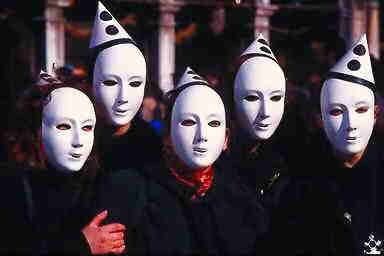
This photo was the prompt. And this is one of the many versions of the poem I wrote, most lost. I found this on an old document from 1999. Oh my, so many of those abstract concepts. But fun to find. Hmm… maybe another rewrite is in order.
I wonder what the news was of the day that convinced me the cold ones rule? I know it’s sure something I still fee.
The Stranger
Oh, so cold
the stranger is everywhere
the soul? sniveling little pest
we’ve sent away.
Trust us, you can
not trust us
Can’t read us, can you?
Modernity’s muse:
mirthless smiles
We see through you
but we are divine;
you cannot
comprehend us.
The stranger is everywhere,
existential nausea chokes.
It’s just that simpering little pest,
that whiner, that soul.
(c) L. Lee 2000
Part 2: Literacy Can Be the Bridge–The Power of Reading and Writing
 How do you get there from here? I had no idea; I wanted to have a life that contained more reading, writing, poetry, nature. I’d always wanted to be a teacher, but could not afford to take any more time with college. I graduated with my teaching certificate, but there were only aide positions or sub positions, neither of which paid enough to pay the rent and neither of which carried insurance benefits.
Yet the rent wanted to be paid, the electric bill wanted to be paid and so on. Not having a family to turn to for any help, I knew I was on my own.
I found what should have been a great job in business, but it was killing me. I’d lay awake at night grinding my teeth, willing the hours not to pass. I just didn’t want to do it anymore, and yet I had no idea how to get there from my present life.
# # # #
For a number of years, I commuted by train to the loop. (That was my favorite part of the day, the commute!) I discovered I could read again, books I wanted to read.
One year, I decided to read only female writers or novels with strong female characters. There was no method to this plan, just the knowledge that I spent most of college reading male writers or about male characters.
I found books at the library and read them voraciously. I discovered Willa Cather, and my life changed forever. Why hadn’t I heard about her or read her books in college? Her characters’ longing for culture and education plus their longing for the beauty of nature resonated with me. I discovered Edith Wharton and the plight of the urban female. I discovered Theodore Dreiser and the plight of the female as he expressed it. I discovered Anne Tyler, Anne Frank, Jane Austen, The Bronte sisters, Virginia Woolf, Amy Tan. I discovered the lovingly drawn character of Helen and her search for education in Bernard Malamud’s The Assistant.
I was unsophisticated in how I chose the books to read, often choosing by the cover, by what was available, by what was on sale, by what I had heard about. This was before the internet, I had no literary types in my life at that point to help me make decisions. I got lucky in that I read many great books and “met” many great characters.
In these books, the longing for a more meaningful life as expressed by strong characters spoke to me: I was not alone.
But what was next, I wondered, even as my home made after college education continued?
Part 1: Literacy Can be the Bridge–The Power of Reading and Writing
 One great thing about getting older (but that’s another story!) is that I can remember things that took a lot of time to accomplish; young people know this: one step at a time in the right direction can truly help lead you to where you want to be in life. Literacy was a very important bridge for me to go from a life I did not want to a life I wanted to live.
As I am older now, I am thinking about how to recreate and re-energize myself, and I turn to my old friends reading and writing. For there are many reasons to believe reading and writing can help me now in my older years–but that is another story.
# # # #
Decades ago, as a young adult, I found myself working in a field that was unhealthy for me. But like most, I had bills to pay and didn’t know how I would ever be able to make a change from a business career to a life filled with teaching and writing. What is the bridge?
Day after day I commuted to the office, feeling like I would literally scream outwardly what I was thinking all day: Get me out of here! I remember writing, in pencil and very small: GMTHOOH on some of my files, perhaps hoping I would get caught, get fired, and be forced to make positive changes in my life.
But I was careful, and I was an excellent employee. How can one be really good at something that kills the soul?
But I was, and I was not fired. Nor was I laid off during those harsh 80s when so many good people got let go of jobs they needed.
But back to the topic–how did reading help?
Some people laugh when I say literacy saved me, but it did. Reading and writing have always been important to me, but when I was working in a field I hated, I pushed reading and writing away from me. It just hurt too much to be around what I could not have as part of my daily life, so I pushed away that which would have helped nourish.
It would take a return to reading and then writing to see me out of a time and place and life I didn’t know how to leave without becoming poor–and I had been poor.
(But that’s another story. So many stories!)
This story is about how literacy, reading and writing, can be a bridge to an improved life. They sure were to me.
Part 2 to follow.
Two Great American writers: Alcott and Cather
Yesterday I wrote about Willa Cather, a great American writer. Links to her most popular novel can be found here: Full Text My Antonia Willa Cather.
And more information about this novel’s 100 year anniversary can be found here: My Antonia 100 year anniversary.
I believe I should re-read My Antonia next in tribute! It’s a precious novel to me, with characters I understand, from the plucky Antonia to the depressed and ultimately suicidal father who laments the harshness of the prairie life, missing his urban life back in Europe.
But we also have to have a look at Louisa May Alcott, author of Little Women. Full text of the novel can be found here: Full text of Little Women.
Like Cather, Alcott felt her life was limited by being born female. Alcott saw her mother working day and night while her father was speaking to Emerson, Thoreau, and at times even Nathaniel Hawthorne; imagine those three greats as your neighbors.
I underestimated Alcott until I read more about her and saw PBS’s biopic, which may be found here: Alcott on American Masters PBS.
I regret I underestimated Alcott as a writer, being influenced by the rather young adult/ juvenile novels she wrote. She wrote so much more! She supported her family of four sisters AND her parents (mom and all the sisters worked at whatever “respectable” women could do, while it seems the father was educated but not particularly inclined to work after his school failed) with her writing of dark gothic stories and then these wildly popular “little women” type novels. Of the latter, she disliked writing them but to quote Fantine from Les Miserables? “It pays a bill.”
I would encourage watching this program and getting to know more about Alcott.
Of the three female writers I have written about so far, Anne Frank, Louisa May Alcott, and Willa Cather, both Alcott and Cather did feel constrained by being female. Anne Frank did not live long enough to learn what the world would do with her, a female writer, after World War II. I don’t want to limit them by saying they are “just” women writers–they were good writers, period. Their gender, for Alcott and Cather, did limit their careers they felt.
Worth looking into further, this idea of how gender can partially become destiny. All three were good writers, however, and I cannot help but wonder what they could have written if they were born male.
I believe the Bronte sisters in England, (Bronte sisters) published using male names, and I believe they also supported an intellectual father who, if I remember correctly, didn’t bring in much money to support the family. I will look into this further.
I am not a literary scholar not an academic; I am a caring writer myself who is in awe of anyone talented in writing. I like to spotlight and give tribute to the greats as I can in my own small way. In a way, it’s good I’m not a scholar but just an interested reader and writer myself, since that way I can be wrong and admit it if I am.
***Another issue to consider later on is social class; Cather, Alcott, and even Anne Frank came from families that might be considered middle class today. I wonder if that is whey they could even dream of being WRITERS.
Anyone else have a favorite female writer? I’d love to hear about her!
 Laura Lee